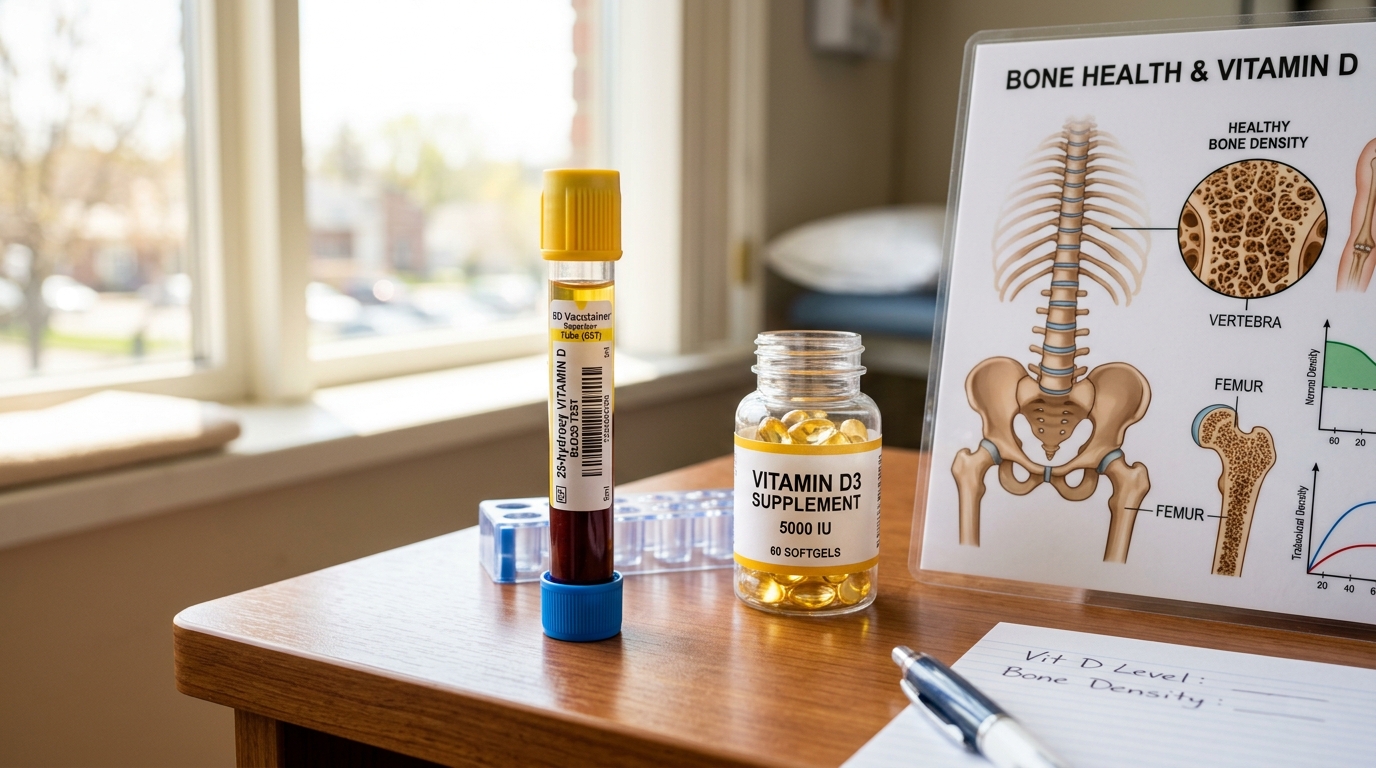
Vitamin D is unique among human micronutrients: it functions fundamentally not as a simple vitamin, but as a potent fat-soluble secosteroid pro-hormone with receptors present in nearly every cell of the body. While traditionally recognized for its role in regulating calcium metabolism and bone mineral density, modern medical research has revealed that Vitamin D modulates over 200 human genes—influencing innate immunity, cardiovascular endothelial function, neuromuscular coordination, and cellular proliferation. Despite abundant year-round sunshine across the Indian subcontinent, clinical surveys indicate that 70% to 80% of urban Indians are clinically deficient in 25-Hydroxy Vitamin D.
Why Vitamin D Is Actually a Neuro-Hormone
Unlike dietary vitamins that act primarily as enzymatic cofactors, Vitamin D undergoes a complex multi-organ biochemical synthesis pathway:
- Cutaneous Synthesis: Solar Ultraviolet B (UVB) radiation (wavelength 290–315 nm) penetrates the epidermis, converting 7-dehydrocholesterol into previtamin D3, which thermally isomerizes into cholecalciferol (Vitamin D3).
- Hepatic Hydroxylation: Cholecalciferol enters circulation and travels to the liver, where the enzyme 25-hydroxylase converts it into 25-Hydroxyvitamin D [25(OH)D] (Calcifediol). This is the primary circulating storage form measured in diagnostic blood tests.
- Renal Activation: In the kidneys, 1-alpha-hydroxylase converts 25(OH)D into the biologically active hormone 1,25-Dihydroxyvitamin D [1,25(OH)2D] (Calcitriol), which binds to Vitamin D Receptors (VDR) in the gut, bone, and immune cells.
The Urban Indian Deficiency Paradox
Why is Vitamin D deficiency epidemic in sunny India? Clinical endocrinologists identify four primary physiological and environmental barriers:
- High Melanin Content in South Asian Skin: Melanin acts as a natural sunscreen. Higher epidermal melanin concentrations absorb UVB photons, requiring individuals with darker skin tones (Fitzpatrick skin types IV and V) to spend 3 to 5 times longer in direct midday sun to synthesize equivalent amounts of Vitamin D compared to lighter-skinned individuals.
- Indoor Lifestyle & Air Pollution: Modern urban professionals spend 90% of daylight hours inside air-conditioned offices and homes. Furthermore, atmospheric particulate matter (PM2.5 and PM10) in metropolitan centers like Delhi NCR scatters and absorbs UVB radiation before it reaches ground level.
- Clothing & Sunscreen: Standard clothing styles cover up to 80% of body surface area, and SPF 30+ sunscreens reduce cutaneous Vitamin D synthesis by over 95%.
- Negligible Dietary Sources: Very few unfortified foods contain meaningful quantities of Vitamin D, making it virtually impossible to meet physiological requirements through standard vegetarian or non-vegetarian Indian diets without supplementation. You can check your status with a simple Vitamin D test at home.
Vitamin D Reference Ranges & Clinical Staging
Diagnostic laboratories measure Total 25-Hydroxy Vitamin D (including D2 and D3 fractions) in ng/mL (or nmol/L). Clinical staging is categorized as follows:
| Serum 25(OH)D (ng/mL) | Clinical Status | Physiological Impact | Medical Action Plan |
|---|---|---|---|
| < 10.0 ng/mL | Severe Deficiency | Severely impaired calcium absorption (< 10%), secondary hyperparathyroidism, osteomalacia, severe bone and muscle pain. | High-dose clinical repletion (e.g., 60,000 IU weekly for 8 weeks under physician supervision). |
| 10.0 – 19.9 ng/mL | Deficiency | Accelerated bone turnover, reduced bone mineral density (osteopenia), chronic muscle aches, frequent infections. | Therapeutic oral supplementation (60,000 IU weekly for 6–8 weeks, followed by maintenance). |
| 20.0 – 29.9 ng/mL | Insufficiency | Sub-optimal calcium absorption, increased long-term osteoporosis and cardiovascular inflammation risk. | Daily maintenance supplementation (1,000–2,000 IU daily or 60,000 IU monthly). |
| 30.0 – 100.0 ng/mL | Optimal Sufficiency | Peak calcium absorption (30%–40%), optimal bone mineralization, robust immune regulation, reduced fall risk in seniors. | Maintain balanced lifestyle, periodic annual checkups. |
| > 100.0 ng/mL | Potential Toxicity | Risk of hypercalcemia, nephrocalcinosis (kidney stones), vascular calcification, nausea, and confusion. | Immediately discontinue Vitamin D and calcium supplements; assess serum calcium. |
Recognizing Subtle Symptoms of Deficiency
Because Vitamin D deficiency develops gradually, symptoms are frequently dismissed as normal aging or work-related stress:
- Chronic Fatigue and Low Stamina: Unexplained persistent tiredness even after a full night of sleep, resulting from impaired mitochondrial oxidative phosphorylation in skeletal muscle.
- Generalized Bone and Lower Back Aches: Throbbing, deep ache in the lumbar spine, pelvis, and tibia caused by unmineralized collagen matrix swelling under the periosteum.
- Recurrent Respiratory Infections: Frequent colds, coughs, and seasonal viral infections due to impaired synthesis of antimicrobial peptides (Cathelicidin and Defensins) in respiratory epithelium.
- Impaired Wound Healing: Delayed skin regeneration and recovery following surgical procedures or minor cuts.
- Mood Disturbances & Seasonal Blues: Vitamin D receptors are concentrated in brain regions associated with serotonin synthesis; low levels correlate with low mood and seasonal affective disorder.
The Bone, Muscle, and Immune Connection
Without sufficient 25(OH)D, the body absorbs only 10% to 15% of dietary calcium. To maintain critical blood calcium levels for cardiac contractions, the parathyroid glands secrete excess Parathyroid Hormone (PTH), which leaches calcium directly out of skeletal bones. Over decades, this causes severe micro-architectural deterioration (osteopenia and osteoporosis), dramatically increasing the risk of fragility fractures in mature adults. Learn more about bone density preservation in our Checkup After 50 Guide.
Safe Supplementation & Monitoring Protocols
If your diagnostic test reveals deficiency, follow these evidence-based safety principles:
- Take Supplements with Fat-Containing Meals: Vitamin D is fat-soluble. Consuming your tablet or softgel with a meal containing healthy fats (such as milk, curd, nuts, or ghee) increases intestinal absorption by up to 50%.
- Include Synergistic Nutrients: Magnesium is an essential enzymatic cofactor required to activate Vitamin D in the liver and kidneys. Adequate Vitamin K2 (MK-7) helps direct absorbed calcium into the bone matrix rather than allowing it to deposit in arterial walls.
- Avoid Unsupervised Chronic Mega-Dosing: Never take 60,000 IU capsules daily. Mega-doses taken daily over several months can cause irreversible hypercalcemia and renal damage. Always re-test your 25(OH)D level after 8 to 12 weeks of therapeutic supplementation.
Check Your Vitamin D & B12 Levels at Home
Find out if deficiency is causing your fatigue or joint pain. Book certified Vitamin D (25-OH) and Vitamin B12 testing with Mission100 with doorstep collection in Delhi NCR.
Frequently Asked Questions
Common clinical questions answered by Mission100 physicians.
No. Fasting is not required for a 25-Hydroxy Vitamin D test. Blood can be collected at any time of day. However, if your test is part of a broader health package that includes fasting glucose or lipids, follow the standard 10 to 12 hour overnight fast.
This article is grounded in peer-reviewed clinical literature and guidelines from leading healthcare authorities:
- [1](2024). "Evaluation, Treatment, and Prevention of Vitamin D Deficiency".
- [2](2024). "Nutrient Requirements and Dietary Guidelines for Indians: Vitamin D and Calcium".
This content is for general informational and educational purposes only and does not substitute for professional medical advice, diagnosis, or treatment. Always seek the advice of a qualified physician or certified healthcare provider with any questions regarding medical conditions or diagnostic tests.